Recipes
A variety of timeless classics and modern innovations
Something broke on our end
We've been notified, and we're fixing it.
Amsterdam Flip
Dutch GeneverEggSimple SyrupAngostura Aromatic Bitters
Dutch genever flip with whole egg and nutmeg
Ash and Ember
MezcalLime JuiceAgave SyrupChocolate Chili Bitters+2
A shaken agave drink carrying two chili bitters, one smoked and one cocoa-dark
Bitter End
Rye WhiskeyFresh Lemon JuiceOrgeat SyrupAngostura Aromatic Bitters+1
Cocktail showcasing multiple bitters
Brandy Crusta
BrandyOrange LiqueurFresh Lemon JuiceAngostura Bitters+1
Brandy cocktail with sugar rim and bitters
Corpse Reviver No. 2
GinCointreauLillet BlancOrange Bitters+2
Classic gin sour with absinthe rinse and orange bitters
Cynar Risotto
CynarArborio RiceVegetable StockShallot+6
Creamy Italian risotto finished with Cynar, where the artichoke-based amaro reinforces the vegetable stock
Danish Sour
Blended WhiskyGammel DanskEgg WhiteGrapefruit Juice+1
Gammel Dansk as the base spirit for once, with grapefruit and egg white
Earl Grey MarTEAni
Earl Grey GinDry VermouthFresh Lemon JuiceAngostura Orange Bitters+1
Gin martini with Earl Grey tea infusion
Fernet Tiramisu
Fernet-BrancaMascarponeEgg YolksEgg Whites+4
Classic Italian tiramisu with Fernet-Branca in the espresso soak — an amaro-forward twist on the Veneto original
Lion of Baltimore
Overproof Pot Still RumJamaican RumSweet VermouthPimento Aromatic Bitters+3
Two rums, sweet vermouth and lime under allspice bitters
Mai Tai
Aged Jamaican RumOrange CuraçaoFresh Lime JuiceAngostura Aromatic Bitters+2
Classic tiki cocktail with aged Jamaican rum and orgeat
Navy Grog
Dark RumLight RumDemerara RumAngostura Aromatic Bitters+3
Tiki cocktail with multiple rums and bitters
Oh Flip
Aged RumCognacBecherovkaTeapot Bitters+3
A whole-egg flip on rum and cognac, with tea bitters and black pepper
Pink Lady
GinEgg WhiteFresh Lemon JuiceAngostura Orange Bitters+1
Gin sour with grenadine and egg white
Pisco Sour
PiscoEgg WhiteFresh Lime JuiceAngostura Aromatic Bitters+1
Peruvian/Chilean sour with pisco
Pocket Square
Amaro CioCiaroGinCampariElderflower Liqueur+2
Six ingredients around a bitter orange amaro, shaken and served over ice
Rabbit Fernet
Letherbee FernetFernet-BrancaStrawberry SyrupLemon Juice
Two fernets, lemon and strawberry syrup over crushed ice
Sakura Martini
GinDry VermouthSakura Bitters
A delicate, floral martini brushed with Japanese cherry-blossom bitters
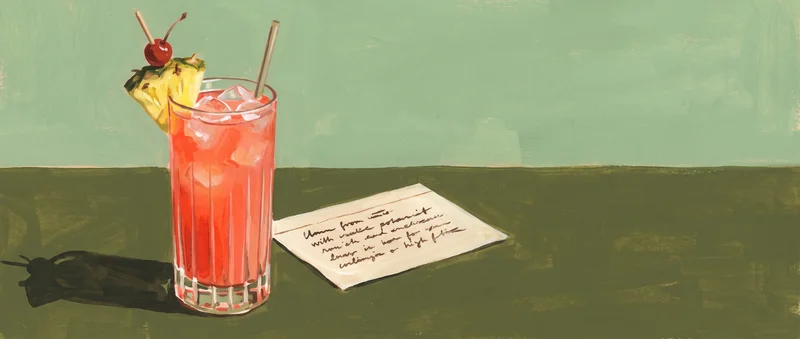
Singapore Sling
GinCherry HeeringBenedictineAngostura Aromatic Bitters+5
Heritage Raffles Hotel cocktail with cherry and pineapple
Smoked Walnut Manhattan
Smoked Walnut BourbonAmaro SibillaWalnut LiqueurXocolatl Mole Bitters
A Manhattan for four, deepened with a honey-sweetened Marche amaro and walnut liqueur
The Silk Road
GinYuzu SakePassionfruit-Infused AperolPlum Bitters+2
Gin and yuzu sake under passionfruit Aperol and plum bitters
The Smoke Also Rises
White RumSfumato RabarbaroMaraschino LiqueurGrapefruit Juice+2
A Hemingway daiquiri pulled toward smoke by Sfumato
Trinidad Sour
Rye WhiskeyFresh Lemon JuiceOrgeat SyrupAngostura Bitters
Orgeat-based sour with Angostura bitters as base
Vieux Carré
Rye WhiskeyCognacSweet VermouthPeychaud's Bitters+2
New Orleans cocktail built on two bitters, Peychaud's and Angostura