Flavored Bitters Recipes
Eight bitters off one formula: 250 ml (8 oz) of high-proof spirit, a teaspoon of gentian root, two weeks of steeping. What changes between them is the botanical. Each recipe below carries its own measures and can be made on its own.
How do you make grapefruit bitters?
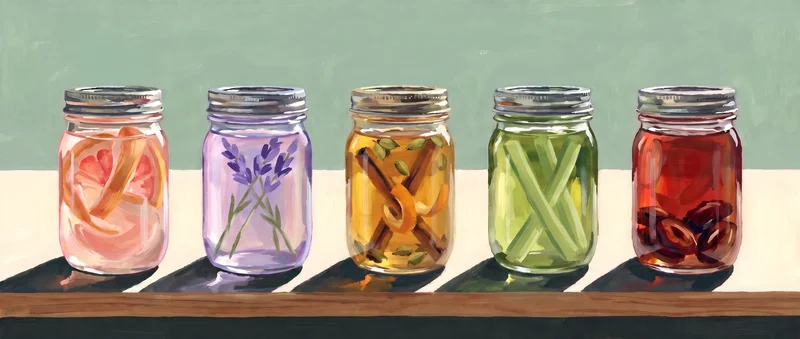
The dried peel of two grapefruits, a teaspoon of gentian root, a few juniper berries and half a teaspoon of coriander seed in 250 ml (8 oz) of high-proof spirit. Two weeks. The juniper is what separates this from orange bitters, giving a drier and more resinous result that sits well in a Paloma or a gin and tonic.
How do you make lavender bitters?
Two teaspoons of culinary lavender, a teaspoon of gentian root, and a strip of lemon peel in 250 ml (8 oz) of spirit. Taste from day three. Lavender extracts faster than anything else on this page and turns soapy past its peak, so this is the one batch more often strained too late than too early. A dash lifts a gin sour or a glass of dry sparkling wine.
How do you make cardamom bitters?
Crack ten green cardamom pods and steep them with a teaspoon of gentian root, a small piece of cinnamon and a strip of orange peel in 250 ml (8 oz) of spirit for about two weeks. Cracking the pods matters more than the count: whole ones give up very little. The finished bitters are warm and perfumed, and a rum Old Fashioned is where that shows clearest.
How do you make ginger bitters?
Three tablespoons of thinly sliced fresh ginger, a teaspoon of gentian root, and a strip of lemon peel in 250 ml (8 oz) of high-proof spirit. One tablespoon of dried ginger stands in for the fresh and leans earthier, where the fresh root gives heat and snap. Either version is built for a Moscow Mule or a whiskey highball.
How do you make celery bitters?
Two tablespoons of celery seed, half the usual gentian, a strip of lemon peel and a few white peppercorns in 250 ml (8 oz) of spirit. The gentian is halved because celery seed brings a savory bitterness of its own. This is the classic savory bitters: a dash deepens a Bloody Mary and dries out a gin Martini.
How do you make walnut bitters?
Toast half a cup of walnuts first, then steep them with a spoonful of cacao nibs, a teaspoon of gentian root and a small piece of cinnamon in 250 ml (8 oz) of high-proof spirit for two to three weeks. The toasting is what produces the dark, oily depth; raw nuts give a thin result. Made for the Manhattan and for autumn Old Fashioneds.
How do you make plum bitters?
Six chopped dried plums, a teaspoon of gentian root, two cloves and a strip of orange peel in 250 ml (8 oz) of spirit. The dried fruit brings a deep stone-fruit sweetness that the gentian keeps honest. Reach for it where a drink wants dark fruit rather than warm spice, which makes it a straight swap for aromatic bitters in a whiskey sour.
How do you make Creole-style bitters?
Two star anise pods, a small handful of dried cherries, a teaspoon of gentian root and a strip of lemon peel in 250 ml (8 oz) of spirit. Strain as soon as the anise is present without dominating, usually inside two weeks. The profile is the New Orleans one: bright and cherry-anise, lighter than aromatic bitters, and the home approximation of what Peychaud's does in a Sazerac.