Make Your Own Bitters: Orange, Aromatic, Chocolate & More
Homemade bitters need three things: high-proof spirit, a bittering agent, and time. Two weeks of steeping turns a neutral spirit and a handful of botanicals into a dasher bottle that exists nowhere else. Orange bitters are the classic first project.
What alcohol should I use for homemade bitters?
The higher the proof, the better the extraction: 50% ABV or above is ideal, so overproof vodka or high-proof rye and bourbon are common choices. Standard 40% spirit works too — just steep longer. Use a neutral spirit to let the botanicals speak, or a flavorful base like rye to have the bitters carry its character.
What makes bitters bitter?
A dedicated bittering agent: gentian root is the workhorse, with cinchona bark and wormwood close behind. Homebrew shops, herbalists, and spice merchants all stock them. A little goes a very long way, so half to one teaspoon per 250 ml (8 oz) of spirit is plenty, and straining early is always an option if the bitterness gets ahead of the aroma.
How long do you infuse bitters?
One to three weeks. Aroma extracts fast: citrus and spice are present within days. Bitterness builds more slowly, so taste every couple of days from day five. Strain when the balance is right; there is no fixed finish line, and a few days too long is recoverable by diluting with a little fresh spirit.
How do you make orange bitters?
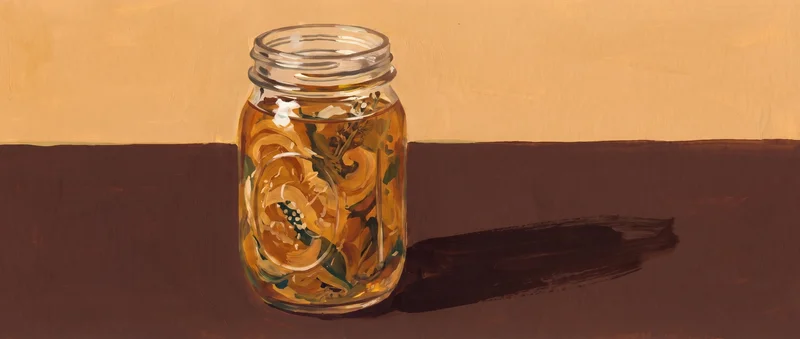
Combine the dried peel of four oranges (fresh works, dried concentrates better), one teaspoon of gentian root, a few cardamom pods, half a teaspoon of coriander seed, and a couple of allspice berries in a jar with 250 ml (8 oz) of high-proof spirit. Seal, shake daily, and taste from day five. Strain through a fine filter when the bitterness and citrus sit in balance (usually around two weeks), then bottle.
How do you make aromatic bitters?
Swap the citrus for warm spice: cinnamon bark, clove, allspice, a few dried cherries, and a strip of orange peel over a rye or bourbon base, with the same teaspoon of gentian. The target is the Old Fashioned profile — clove and cinnamon up front, dark fruit behind. Steep and strain exactly as for orange bitters.
How do you make chocolate bitters?
Cacao nibs are the backbone at about two tablespoons per 250 ml (8 oz), supported by half a vanilla pod, a small piece of cinnamon, and the usual teaspoon of gentian. The nibs give roasted cocoa depth without sweetness. Excellent in a Manhattan or any aged-spirit drink that wants dessert-adjacent darkness.
Can you make non-alcoholic bitters?
Yes — swap the spirit for food-grade vegetable glycerin cut three-to-one with water, use the same botanicals, and steep three to four weeks; glycerin extracts more slowly than alcohol. Without the preserving alcohol the finished bottle belongs in the fridge and is best used within a few months. They season a mocktail exactly like the real thing.
What can you substitute for gentian root?
Any clean bittering botanical: wormwood (use half as much; it is sharper), quassia chips (neutral and very bitter, swap one-to-one), or cinchona bark (adds a quinine, tonic-water note; keep doses small). Dandelion root is the gentlest option for a softer batch. Whatever the choice, start under a teaspoon per 250 ml (8 oz) and taste as it steeps — bittering agents forgive less than aromatics.
How should homemade bitters be stored?
Strain into dasher or dropper bottles, label each batch with its date and recipe, and keep them in a dark cupboard. The high-proof base preserves them indefinitely, just like commercial bitters.
Explore more
Other Guides
Bitters Substitutes: What Swaps Cleanly and What Does Not
Substituting bitters: what stands in for Angostura, Peychaud's, Campari and Fernet-Branca, and the recipes where nothing does.
How to Make Amaro at Home: Infusing and Sweetening
How to make amaro at home: the infusion, the bittering agents, how much sugar a homemade bitter liqueur takes, and where the craft parts ways with making bitters.
Flavored Bitters Recipes: Grapefruit, Lavender, Cardamom, Walnut and More
Eight bitters recipes for the infusion jar: grapefruit, lavender, cardamom, ginger, celery, walnut, plum and Creole-style, each with its measures and steeping time.