How Cocktail Bitters Are Made
Making bitters takes time and a scale rather than equipment, which is why the craft category grew the way it did. The variables are the botanical list, the strength of the spirit and the length of the steep, and recipes run from five botanicals to more than fifty.
What is the basic process for making bitters?
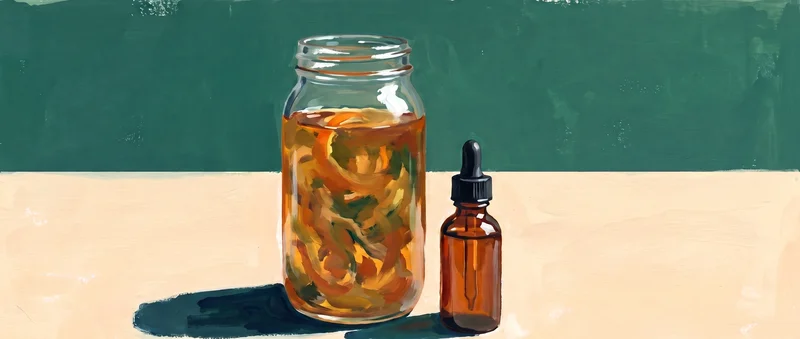
The fundamental process is maceration: soaking botanical ingredients in high-proof neutral spirit (typically 50-60% ABV) for a period of days to weeks. The spirit extracts flavors, colors, and bitter compounds from the botanicals. After straining and sometimes filtering, the result is a concentrated flavoring. Some producers age their bitters in barrels for additional complexity.
What botanicals are used in bitters?
Bittering agents form the backbone: gentian root, wormwood, quassia bark, and cinchona bark are the most common. Aromatic ingredients add character: cinnamon, clove, cardamom, star anise, and allspice for warm bitters; citrus peels for bright bitters; cacao nibs for chocolate bitters. Every producer has their own proprietary blend, and recipes range from five ingredients to over fifty.
Can I make bitters at home?
Yes. Home bitters are straightforward to make. It takes high-proof neutral spirit (Everclear or overproof vodka), the chosen botanicals, mason jars, and patience. A basic aromatic recipe: combine gentian root, cinnamon bark, orange peel, and cloves in spirit for two weeks, shaking daily. Strain through cheesecloth, sweeten slightly with simple syrup if desired, and bottle.
How long does the maceration process take?
Most bitters macerate for one to four weeks, depending on the botanicals and desired intensity. Roots and bark need longer extraction times (2-4 weeks) than delicate ingredients like citrus peel or flowers (3-7 days). Many producers use a split maceration method: steeping different ingredients separately for optimal periods, then blending the tinctures together.
What makes commercial bitters different from homemade?
Commercial producers have access to rare botanicals, precise temperature control, and decades of recipe refinement. They can maintain exact consistency across batches. Homemade bitters are rewarding but will vary batch to batch. The advantage of a home batch is customization: flavor profiles no commercial producer offers, tuned to the drinks that will use them.
Explore more
Other Guides
Essential Bitters Cocktails: The 10 Drinks You Need to Know
The 10 essential bitters cocktails for any home bar: Old Fashioned, Manhattan, Negroni, Sazerac, and more — beginner-friendly classics.
How to Use Bitters in Cocktails: A Practical Guide
Using bitters in a drink: dashes against ounces, which spirits take which bitters, and the mistakes that flatten a build.
Beer Cocktails: A Field Guide
Beer cocktails from the Michelada to the Fernet and IPA: Snakebite, Shandy variations, and how amari behave with beer.