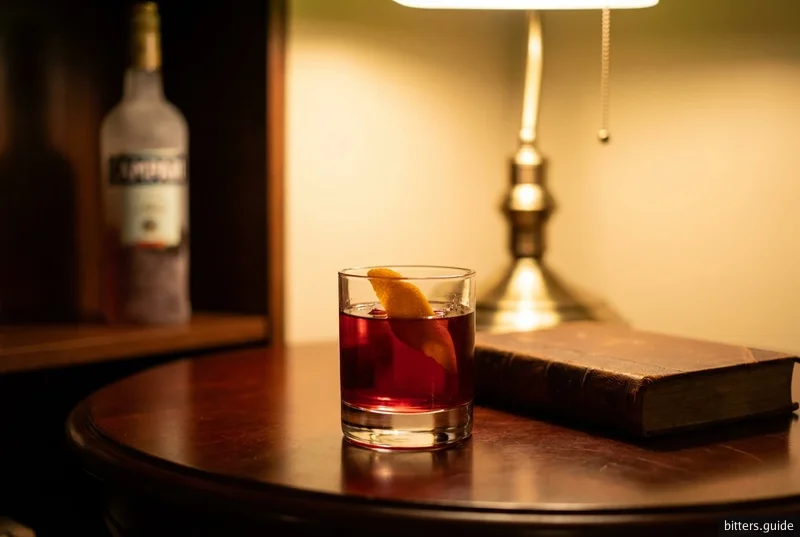
Ingredients
- 2 dashesAngostura Orange BittersBright citrus characterSubstitute: Regans' Orange No. 6
- 1 ozCampariItalian bitter aperitifSubstitute: Aperol for lighter version
- 1 ozSweet VermouthItalian sweet vermouthSubstitute: Dolin Rouge
- 1 1/2 ozBourbon WhiskeyUse quality bourbonSubstitute: Rye whiskey
Instructions
- Add 1 1/2 oz bourbon, 1 oz Campari, and 1 oz sweet vermouth to mixing glass
- Add 2 dashes orange bitters
- Fill with ice and stir until well chilled
- Strain over large ice cube in old fashioned glass
- Express orange peel oils and garnish
Technique Notes
Stir longer than a Negroni. Bourbon needs more dilution than gin to open up, and this is the difference between rich and hot.
Why the Boulevardier Works
Swapping gin for bourbon turns the Negroni from herbaceous to vanilla-warm, and the orange bitters re-introduce the citrus lift that gin's botanicals were doing for free. Campari's bitterness has more sweetness to fight here, which is why the drink reads richer and slower than its gin parent.
Discover more
Explore classic cocktailsFeatured Bitters
Recipes with Angostura Orange Bitters or Campari
Featured Recipe Collections
Amaro Hour
Bittersweet amaro and bitter-liqueur cocktails across the spectrum.
Essential Bitters Cocktails
Ten drinks, and the bitter ingredient does a different job from one to the next. In the Old Fashioned and the Manhattan it is a seasoning, a couple of dashes to sharpen the spirit. In the Negroni and the Boulevardier it carries the drink. In the Sazerac it sets the flavour the rest of the drink is built around, with rye and absinthe behind it. In the Trinidad Sour it is the base spirit itself. Four jobs, one kind of ingredient.
French Aperitif Tradition
Five drinks on French bottles: Suze in the spritz and in Wayne Collins' White Negroni, cognac and Peychaud's in the Vieux Carré, the Champagne Cocktail's bitters-soaked sugar cube, and the Boulevardier, made in 1920s Paris.