Amaro and Food: The Italian Pairing Tradition
In Italy, amaro is not just a drink but a course. The bottle comes out with the cheese, after the dessert, or alongside a plate of cured meats. Each region's amaro is shaped by the food it evolved alongside.
Why is amaro paired with food in Italy?
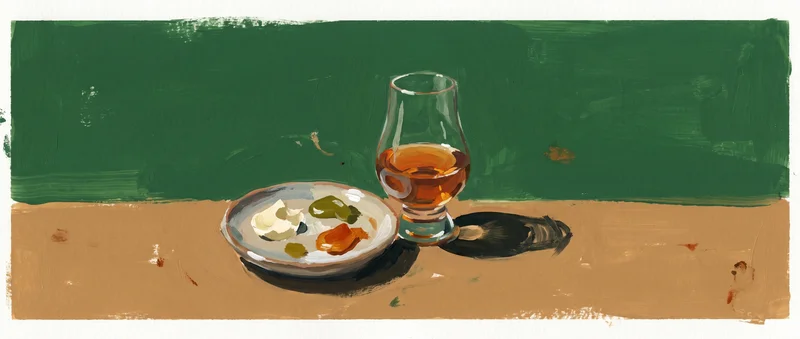
Amaro is traditionally drunk as a digestif after a meal. Regional amari evolved alongside regional cuisines, so the flavor profiles naturally harmonize with the food of their home provinces. Fernet Branca from Milan cuts through the butter-and-cream richness of Lombard cooking. Averna from Sicily pairs with the island's heavier meats and aged cheeses. Braulio from Valtellina complements alpine charcuterie. Pairing amaro with food is not a rule imposed by sommeliers; it is a habit that the cuisine and the liqueur developed together.
What foods pair well with amaro?
Aged cheeses are the classic starting point: Averna with Pecorino, Nonino with Parmigiano, Amaro Montenegro with a creamy Taleggio. Cured meats work across most amari; Fernet or Braulio with a tagliere of prosciutto and salame is a standard alpine move. Desserts built around chocolate, espresso, or dried fruit pair naturally with sweeter amari like Ramazzotti or Amaro di Angostura. Strong coffee is itself an amaro pairing; the traditional caffè corretto (espresso corrected with a splash of amaro) is still how many Italians finish a meal.
How do regional amari match regional Italian cuisine?
Southern Italian amari like Averna (Sicily) and Amaro Lucano (Basilicata) are richer and more caramel-forward, matching the heavier meat dishes and aged cheeses of the south. Central amari like Montenegro (Bologna) are more balanced and pair with the cream-and-egg cooking of Emilia-Romagna. Alpine amari like Braulio and Génépy are mentholated and herbal, cutting the fat of cured meats, butter, and mountain cheeses. Fernet Branca, developed in Milan, is too intense to sit with one region in the usual sense, and it holds up against the richest food on the table.
Can I cook with amaro?
Yes, and it is an established Italian home-cooking technique. Campari glazes for strawberries or roast duck bring bitter-orange depth to fruit and rich meat alike. Cynar works in risotto, where its artichoke base reinforces vegetable stock. Fernet Branca appears in tiramisu as a cocoa-friendly substitute for or addition to espresso. Nonino or Averna reduced with balsamic makes a glaze for pork or roasted figs. Use amaro as a fortified wine: deglaze a pan, reduce until syrupy, and finish with butter.
Which amaro pairs with which course?
Aperitif (before the meal): Aperol or Campari, served as a Spritz or Americano, with olives and crostini. Primo and secondo (pasta and main): amaro rarely appears alongside food in the strict sense, but a chilled Montenegro is sometimes sipped between courses at long meals. Formaggi (cheese course): a medium amaro like Averna, Nonino, or Ramazzotti. Dolce (dessert): a richer amaro works with chocolate and coffee-based desserts. Ammazzacaffè (after coffee): the most intense fernet-style amaro, drunk neat in a small glass to close the meal.
Explore more
Other Guides
Fernet Culture: The Handshake, the Boilermaker, and the Ritual
Fernet Branca as ritual: the bartender's handshake, the IPA boilermaker, espresso con Fernet, and the Argentine Fernet and Coke.
Digestif vs Aperitif: The Italian Drinking Hours Explained
Aperitif against digestif: when each is drunk, how they taste, and the bottles that fill each role.
What Are Cocktail Bitters? A Beginner's Guide
What cocktail bitters are, what they're made of, how much alcohol they contain, how long they keep, and which bottle to try first.