Beer Cocktails: A Field Guide
Beer cocktails sit at the intersection of bar culture and pub tradition. From the Michelada to the bartender's handshake, a dash of bitters or a pour of amaro can turn an ordinary pint into something worth savoring.
What is a beer cocktail?
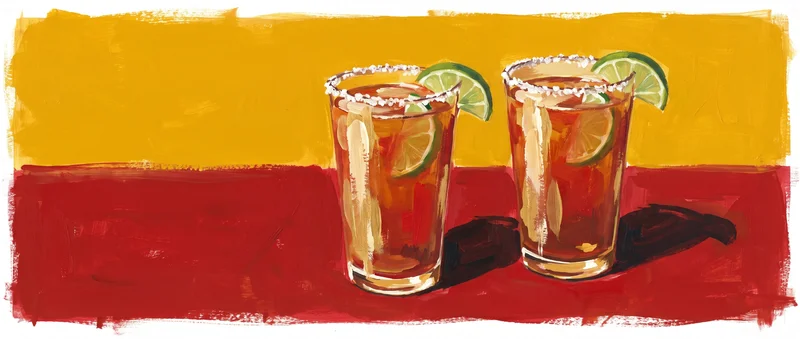
A beer cocktail is any mixed drink that uses beer as a primary ingredient, either as the base or as a substantial modifier. This can mean beer chased or mixed with a spirit, like a boilermaker or Fernet with an IPA; beer seasoned with juice, salt and sauces, like a Michelada; or beer lengthened with a soft drink, like a Shandy. Beer cocktails are often built rather than shaken, since carbonation has to be preserved, and they lean on seasoning ingredients like bitters, lime, salt, and hot sauce to balance the malt and hops.
What are the classic beer cocktails?
The Michelada travels furthest, built in Mexico from lager, lime, salt, hot sauce, Worcestershire, and a dash of aromatic bitters. The Shandy or Radler pairs lager with lemonade or citrus soda and is ubiquitous across Northern Europe. The Snakebite and Black combines lager with cider and a dash of blackcurrant cordial, a UK pub standard. The Dog's Nose is a nineteenth-century English mix of porter and gin. The Bicicletta pairs Campari or a similar bitter with white wine and soda, and its beer-based cousin swaps in lager. Each of these drinks predates the modern cocktail revival, which is part of why they feel underappreciated in cocktail bars today.
What is the bartender's handshake?
The bartender's handshake is an industry ritual: an ounce of chilled Fernet Branca served as a shot, usually chased with a cold IPA or lager. It emerged from San Francisco bar culture in the 2000s and spread across the United States as a way for bartenders to greet each other and visiting colleagues. The logic is partly palate cleansing (Fernet's menthol and bitter herbs cut through a night of sugar and citrus) and partly tribal: offering or accepting the shot signals knowledge of the culture. Today many craft beer bars keep a cold bottle of Fernet specifically for this pairing.
How do I make a great Michelada?
Start with a cold Mexican lager (Modelo Especial, Pacifico, or Tecate are traditional). Rim a pint glass with a mix of salt and chili powder. Fill with ice. Add the juice of one lime, several dashes of hot sauce (Valentina or Cholula), a teaspoon of Worcestershire, and two or three dashes of Angostura aromatic bitters. Top with the beer, stir gently, and garnish with a lime wedge. The bitters are the quiet secret: they tie the lime, salt and Worcestershire together and add a warming spice depth underneath.
Can I use bitters directly in beer?
Yes, and it is a historical pub tradition. A dash of Angostura in a pint of lager is a Caribbean and UK pub classic sometimes called an Angostura lager. A few drops of orange bitters in a wheat beer sharpens the citrus notes that are already present. Peychaud's in a stout adds cherry and anise depth. The rule of thumb is to match the bitters to the beer: aromatic with lagers and pale ales, orange with wheat beers, chocolate or mole with stouts and porters. Start with two dashes per pint and adjust from there.
Explore more
Other Guides
Cooking with Bitters: A Practical Guide
Bitters in the kitchen: savory and sweet applications, dosing, standing in for extracts, and which brands hold up to heat.
Make Your Own Bitters: Orange, Aromatic, Chocolate & More
How to make bitters at home: base spirit, bittering agents, how long to infuse, and step-by-step orange, aromatic and chocolate bitters recipes.
Bitters Substitutes: What Swaps Cleanly and What Does Not
Substituting bitters: what stands in for Angostura, Peychaud's, Campari and Fernet-Branca, and the recipes where nothing does.